Don't Buy Until You Read This: Nzxt Function Elite Mini Tkl vs Acemagic F3A Mini Pc
Introduction
The market for compact computing and peripherals has never been more crowded. Two products that often surface in conversations about small-footprint setups are the Nzxt Function Elite Mini Tkl and the Acemagic F3A Mini Pc. On paper these items serve very different roles — one is a performance-focused compact mechanical keyboard, the other a full small-form-factor computer — but many buyers comparing desk real estate, workflow efficiency, and value will weigh them side-by-side when designing a minimalist workstation or living-room PC setup.
This article examines each product through practical, buyer-oriented lenses: build quality, real-world performance, connectivity and expandability, user experience, and long-term value. It includes a direct comparison table, concise pros and cons, a buying guide keyed to common use cases, and a closing assessment to help readers decide which product — or combination of products — best fits their needs.
Nzxt Function Elite Mini Tkl — Detailed Review and Analysis
Overview
The Nzxt Function Elite Mini Tkl is positioned as a compact tenkeyless mechanical keyboard aimed at gamers and content creators who prioritize desk space without sacrificing typing quality. It follows the trend of premium compact keyboards by focusing on a sturdy case, responsive switches, and a software-backed customization layer for lighting and key assignments.
Design and Build
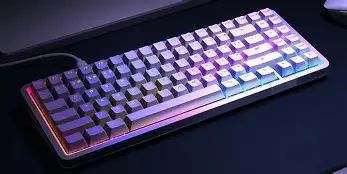
Build quality is a primary concern for buyers in this category. The Function Elite Mini Tkl typically sports a solid chassis with a low-profile or slightly angled typing surface, often combining metal top plates with ABS or PBT keycaps depending on the SKU. For users who prefer a desk with minimal clutter, the 60–80% layout (a TKL variant) frees up space while retaining essential navigation keys.
Switches, Typing Feel, and Acoustics
Keyboard feel is subjective but critical. Nzxt's higher-end models are usually available with a choice of mechanical switches — linear, tactile, or clicky — and some configurations offer hot-swappable sockets so the switches can be changed without soldering. This matters for buyers who want to tune travel distance, actuation force, or sound profile over time. Stabilizers and factory lubing quality will determine rattle and sound; users who are sensitive to key noise should test or seek community feedback on a given batch.
Connectivity and Software
Connectivity is straightforward: expect a detachable USB-C cable for stable wired operation; wireless options vary by model and configuration. Nzxt's software ecosystem typically provides per-key remapping, macro programming, and RGB control. For professionals who use macros or layer profiles (streamers, developers, designers), robust software support can be a deciding factor. However, those who prefer plug-and-play simplicity should ensure the keyboard stores onboard profiles to avoid dependency on a driver suite.
Real-World Use Cases
- Gamers: Compact layout improves mouse space; low-latency wired connection is preferred for competitive play.
- Writers and Developers: Tactile or linear switches can be selected to match typing cadence; good key rollover and anti-ghosting are essential.
- Content Creators/Streamers: Macro keys and profile switching help with scene changes and shortcuts.
- Minimalists and Small-Desk Users: Saves desk real estate and pairs well with VESA-mounted mini PCs or laptop setups.
Who Should Consider It
Buyers who value a premium mechanical typing experience, customization, and a smaller footprint on the desk. It’s also a strong choice for people who want an upgradeable keyboard platform (switch swapping, new keycap sets) and those who use macros or layered profiles frequently.
Pros & Cons
- Pros
- Compact layout frees desk space without losing core keys
- High-quality build materials and felt premium to the touch
- Switch choice and hot-swap support in many SKUs
- Strong software control for macros and lighting
- Cons
- Premium price relative to basic compact keyboards
- Software can be a dependency; onboard storage varies by model
- May require aftermarket mods (lubing, switch swaps) to reach ideal acoustics
- No numeric pad — not ideal for heavy spreadsheet users
Acemagic F3A Mini Pc — Detailed Review and Analysis
Overview
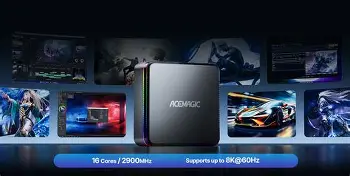
The Acemagic F3A Mini Pc is an ultra-compact desktop solution aimed at users who need a capable machine in a small chassis. Mini PCs like the F3A are built for space-constrained environments: home offices, media centers, point-of-sale systems, and light workstation tasks. These devices often come in a variety of configurations, allowing buyers to choose a balance between CPU performance, memory capacity, and storage options.
Design and Build
Small, often VESA-mountable chassis enable tucking the computer behind a monitor or under a desk. Thermals and fan design are important because compact machines must dissipate heat from powerful chips in a limited volume. Buyers should inspect heatsink design and fan control behavior to understand noise levels under load.
Discover deals on Laptops & Computers — updated daily.
Shop Amazon →Performance and Expandability
Mini PCs commonly use mobile-class CPUs or low-power desktop parts. The Acemagic F3A may be offered with a range of processors in different markets; the practical implication is that performance scales with the chosen configuration. For typical users, a modern mid-range processor paired with NVMe SSD storage and 16–32GB of RAM will handle web browsing, office suites, software development tasks, and light content creation comfortably. Integrated graphics are adequate for media playback and low-to-moderate gaming; heavier 3D workloads require discrete GPUs, which are rarely available in this form factor.
Upgradeability is a mixed bag: M.2 NVMe storage is commonly user-replaceable, and some models allow RAM upgrades; others have soldered memory. Buyers who intend to keep the unit for years should confirm RAM and storage accessibility before purchase.
Connectivity and Ports
Mini PCs often feature a generous array of ports for their size: multiple display outputs (HDMI, DisplayPort), USB-A and USB-C ports, Gigabit Ethernet, and a 3.5mm audio jack. Wireless networking and Bluetooth are typical, though the wireless generation may differ by SKU. For living-room media use, support for HDMI-CEC and solid 4K60 output are practical considerations.
Real-World Use Cases
- Home Office: A quiet, unobtrusive machine that handles documents, browsers, and conferencing.
- Media Center: Paired with streaming services and local media libraries; small size makes for clean AV setups.
- Developer/Light Workstation: Sufficient for compiling smaller projects, running VMs or containers at modest scale.
- Point-of-Sale / Industrial: Compact, mountable footprint ideal for kiosks and tight counters.
Who Should Consider It
Buyers who prioritize space-saving hardware, silent operation, and sufficient general-purpose performance for office, streaming, and lighter content tasks. It’s well suited for those who need a dedicated home-theater PC or a discreet office machine but less ideal for high-end gaming or heavy 3D rendering.
Pros & Cons
- Pros
- Very small footprint; easy to mount or hide
- Reasonable general-purpose performance for productivity and media
- Typically energy efficient with low power draw
- Good selection of ports for displays and peripherals
- Cons
- Thermal constraints can limit sustained performance
- Upgrade options vary and can be limited (soldered RAM, single M.2 slot)
- Not suitable for high-end gaming or GPU-heavy tasks
- Configuration differences by region mean shoppers must verify exact specs
Side-by-Side Comparison
| Attribute | Nzxt Function Elite Mini Tkl | Acemagic F3A Mini Pc |
|---|---|---|
| Category | Mechanical compact keyboard | Small-form-factor desktop computer |
| Primary Use | Typing, gaming, macros, desk ergonomics | Productivity, media, compact workstation |
| Form Factor | Tenkeyless (Mini TKL) compact layout | VESA-mountable mini PC chassis |
| Performance | Dependent on switch type and firmware; no compute tasks | Dependent on chosen CPU/RAM/SSD configuration |
| Customizability | High — switch swaps, keycaps, macros, lighting | Moderate — storage/RAM upgrades vary by SKU |
| Ports & Connectivity | Wired USB-C (and sometimes wireless options) | Multiple display outputs, USB-A/C, Ethernet, Wi‑Fi/Bluetooth (varies) |
| Noise | Depends on switches and mods | Depends on cooling design; generally low at idle |
| Best For | Gamers and typists wanting premium compact keyboard | Users needing a discreet, capable PC for office or media |
| Price | Premium for the keyboard category; varies with configuration and accessories | Varies widely by hardware choice; mini PCs can be excellent value or premium |
Buying Guide: How to Choose Between Them
Define the Primary Need
Start by defining the problem to solve. If the priority is an improved typing experience, reduced desk clutter, or programmable macro control for productivity or gaming, the Nzxt Function Elite Mini Tkl is the relevant purchase. If the requirement is a compact computing platform that replaces a desktop tower or integrates into a living-room AV setup, the Acemagic F3A Mini Pc is the option to evaluate.
Match Specs to Use Case
For the keyboard, consider switch type (linear vs tactile), hot-swap capability, keycap material (PBT preferred for durability), and whether the keyboard has onboard profile storage. For the mini PC, focus on CPU class (number of cores and generations), RAM capacity and whether it is user-upgradeable, storage type (NVMe for best responsiveness), and the number and type of display outputs required.
Consider Ergonomics and Desk Layout
Compact keyboards free mouse space and pair well with VESA-mounted mini PCs. If the desk is small, combining a mini TKL keyboard with a mini PC maximizes usable area. Conversely, spreadsheet-heavy users or those who rely on a numeric keypad should either choose a full keyboard or plan for an external number pad.
Portability and Maintenance
Keyboards are portable and typically easy to maintain; switch swapping and keycap replacement are common aftermarket activities. Mini PCs are portable in the sense they are easy to move between locations, but internal access and repairs can be more complicated. Confirm warranty terms and ease of opening the chassis if upgrades are important.
Find top-rated Laptops & Computers products at great prices.
Browse Now →Noise and Thermals
Consider noise tolerance: mechanical keyboards can be loud depending on switches and mods; mini PCs balance cooling and acoustics. Users in shared or quiet spaces should prioritize quieter switches and a mini PC with efficient thermal design or passive cooling options.
Future-Proofing and Value
For long-term value, prioritize devices that offer upgrade paths. Hot-swappable keyboards and mini PCs with accessible SO-DIMM or M.2 slots are more future-proof. For the mini PC, a slightly more powerful CPU and headroom for RAM are valuable for longevity.
Budget Considerations
Compare purchase cost against the combined value of what the device brings to the desk. A premium keyboard can dramatically improve comfort and productivity, while a mini PC can replace multiple devices (e.g., a streaming box + a small desktop). Factor in potential accessory costs (keycap sets, external storage, docking solutions) when setting a budget.
Practical Tips Before Buying
- Test If Possible — Try switch types at a retail store or community meetup to confirm preference.
- Check Exact SKU — For mini PCs especially, regional SKUs can differ in memory, wireless module, and port selection.
- Confirm Return Policy — Mechanical feel and system stability are personal; a lenient return window reduces risk.
- Plan for Expansion — Verify whether RAM and storage are user-replaceable before depending on future upgrades.
- Read Community Feedback — Forums and user reviews often surface thermal or driver issues not obvious in spec sheets.
Conclusion
Narrowing the choice between the Nzxt Function Elite Mini Tkl and the Acemagic F3A Mini Pc is straightforward when the buyer’s primary goal is clear. The Nzxt Function Elite Mini Tkl is a focused upgrade for anyone seeking a superior compact typing experience, programmability, and a cleaner desk footprint. It rewards users who care about switch feel, build quality, and customization.
The Acemagic F3A Mini Pc, by contrast, solves a different set of problems: it provides a compact, often energy-efficient computing platform that fits in constrained spaces while delivering the performance required for everyday productivity and media consumption. It is the better choice for those who need a full PC in a small package.
Ultimately these products can complement each other: a small, powerful mini PC paired with a high-quality compact keyboard yields a capable, tidy workstation. Buyers should prioritize the device that addresses their immediate needs — exceptional typing and desk ergonomics versus compact computing power — while paying attention to upgrade paths, noise, and real-world performance reported by other users.