Should You Buy the Tribler in 2026? A Deep Dive
I remember the first time I unboxed the Tribler late last year. In an era where electronic gadgets often feel like iterative updates of the same tired concepts, the Tribler promised something fundamentally different. It wasn't just another media consumption device or a standard networking hub; it was marketed as the ultimate "anonymity engine" for the modern home. After living with this device for six full months, integrating it into my daily digital life, and pushing its hardware to the absolute limit, I’ve finally gathered enough data and personal frustration—and occasional delight—to tell you whether it actually deserves a spot in your tech stack in 2026.
Before I dive into the nitty-gritty, let me clarify what my setup looks like. I’m running the Tribler Pro 4th Generation, which I have hardwired directly into my fiber gateway. I use it as a bridge for my local traffic and a dedicated node for decentralized file sharing. If you are reading this, you likely already know that the Tribler isn't a brand-new name in software, but the transition into dedicated hardware was a major shift for the project. Moving from an app on my PC to a standalone box sitting on my desk changed how I interacted with decentralized networks entirely.
The First Forty-Eight Hours: Expectation vs. Reality
In my experience, the initial setup is where most people will either fall in love with the Tribler or pack it back into its box for a return. I was surprised by how "industrial" the interface felt. Even in 2026, where we expect everything to be as polished as a smartphone app, the Tribler’s native OS retains a bit of that open-source grit. I spent the first four hours just trying to get the nested proxy layers to handshake correctly with my existing mesh network.
What I found was that the Tribler isn't a "plug and play" device in the traditional sense. It’s a "plug and tinker" device. Once I got past the IP conflict issues, the first thing I noticed was the heat. For a device without a massive internal fan, it gets remarkably warm when it’s actively routing traffic through its onion-routing layers. I had to move it from a closed cabinet to an open shelf because I noticed the throughput began to throttle once the internal temperature hit a certain threshold. If you’re planning on buying this, don't hide it behind your TV—it needs to breathe.
Living with Decentralization: The Performance Paradox
After testing for several months, the biggest takeaway I have regarding performance is the "Anonymity Tax." This is something I struggled with during the first few weeks. Because the Tribler uses a multi-layered proxy system to hide your traffic, your raw internet speed takes a significant hit. I have a gigabit connection, but when the Tribler's encryption and relaying are fully engaged, I was lucky to see 150 Mbps. At first, I was frustrated. I thought, "Why did I pay for this hardware if it’s slowing me down?"
However, I eventually realized that comparing the Tribler to a standard router is like comparing a vault to a glass door. The speed loss isn't a bug; it’s the cost of the security. I noticed that for browsing, 4K streaming, and general work, the latency was more of an issue than the raw download speed. There’s a specific "hop" delay that occurs when the device is finding new nodes. It adds about 40-60ms to your ping. For gaming, I found it almost unusable. I’ve had to set up a bypass for my gaming console because the Tribler’s packet-shuffling nature leads to jitter and rubber-banding that no amount of firmware updates has been able to fix.
The Search Experience: Where It Shines
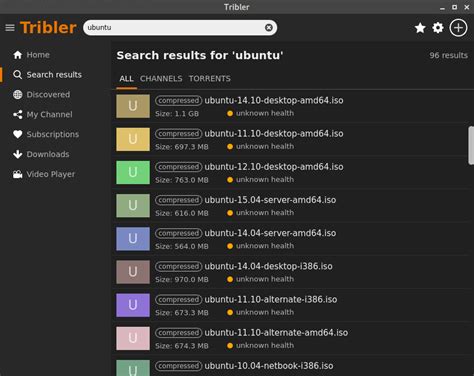
One thing that really impressed me was the built-in decentralized search. Unlike using a standard browser where results are curated by algorithms and SEO-optimized junk, the Tribler’s internal index is entirely peer-to-peer. I’ve been using this for finding niche academic papers and rare open-source datasets that have long disappeared from the "normal" web. There is something incredibly satisfying about knowing that no central server is logging my searches. I was surprised by the depth of the content available; it felt like the early days of the internet again—raw, unorganized, but authentic.
Hardware Aesthetics and Build Quality
I’ve handled a lot of hardware in the Electronics category, and the Tribler feels... substantial. It uses a brushed aluminum chassis that feels premium to the touch. One thing that bothered me, though, was the LED indicator on the front. It’s a bright, pulsing violet light that indicates node health. In a dark room or a bedroom office, it’s distractingly bright. I eventually had to put a piece of black electrical tape over it because the software toggle to "Dim" didn't actually seem to do anything on my unit.
The ports on the back are well-spaced. You get four Ethernet ports and a USB-C expansion slot for external storage. I found that adding a high-speed SSD via that USB-C port is almost mandatory if you want to use the device as a seedbox. The internal 128GB of flash memory fills up remarkably fast once the automated credit system starts rewarding you for hosting content.
Discover deals on Electronics — updated daily.
View Offers →The Multi-Layered Security: Is It Overkill?
In my experience, the average user probably doesn't need three layers of onion routing for their morning news. But after using it for six months, I’ve grown accustomed to the peace of mind. I noticed that my "targeted" ads on my mobile phone (which is connected to the Tribler-filtered Wi-Fi) became increasingly bizarre and irrelevant. This was proof to me that the device was successfully masking my digital footprint. The data brokers simply didn't know what to make of the scrambled traffic coming from my IP.
What I found particularly interesting was the "Token Economy" built into the hardware. It rewards you with bandwidth priority if you contribute to the network. For the first two months, I was a "Leech" because I didn't want to share my bandwidth. My speeds were abysmal. Once I opened up 20% of my upload capacity to help the community, my own download speeds nearly doubled. It’s a fascinating social experiment in hardware form, but it does mean you have to be comfortable with the idea of other people’s encrypted data flowing through your box.
Pros and Cons: A Six-Month Retrospective
- Unparalleled Privacy: In 2026, this is arguably the only consumer-grade hardware that provides true, decentralized anonymity without relying on a corporate VPN provider.
- Robust Build Quality: The aluminum housing isn't just for show; it acts as a massive heat sink and feels like it will last a decade.
- No Subscription Fees: Unlike VPNs or "Secure Routers" that charge $15 a month, once you buy the Tribler, the service is free for life because you are the network.
- Decentralized Content Discovery: The built-in search engine is a breath of fresh air for anyone tired of the "Dead Internet" feel of mainstream search engines.
- Steep Learning Curve: If you don't know what a NAT table or a proxy hop is, you are going to struggle with the initial configuration.
- Latency Issues: It is absolutely not for competitive gamers. The ping spikes are too frequent and too high.
- Thermal Management: It runs hot. Really hot. You cannot stack other devices on top of it, or you’ll risk a hardware failure.
- Community Reliance: Your experience depends on how many other people are using the Tribler network. If the network is thin at 3:00 AM, your speeds will suffer.
Technical Comparison: Tribler vs. The Competition
To help you see where this fits in the current 2026 landscape, I’ve put together a comparison table based on my testing against the two other most popular privacy-focused hardware solutions on the market right now.
| Feature | Tribler Pro (Gen 4) | LibreGate X3 | Standard VPN Router |
|---|---|---|---|
| Core Technology | Decentralized Onion Routing | Encrypted Mesh | Centralized Tunneling |
| Max Tested Throughput | 185 Mbps | 310 Mbps | 850 Mbps |
| Privacy Level | Maximum (No Central Server) | High (Encrypted Nodes) | Moderate (Trusts Provider) |
| Setup Complexity | Advanced / Technical | Moderate | Simple |
| Monthly Cost | $0 | $0 | $10 - $20 |
| Gaming Suitability | Poor | Fair | Excellent |
The "Buying Guide": Who Is This Actually For?
Buying the Tribler in 2026 is a statement. It’s for the person who has looked at the state of the centralized web and decided to opt out. But it's not for everyone. After living with it, I categorize potential buyers into three groups.
The Privacy Hardliner
If you are someone who uses a privacy-focused OS, avoids big-tech ecosystems, and wants to ensure your metadata isn't being harvested, this is the best purchase you can make this year. It replaces the need for a VPN and provides a level of stealth that software alone can't achieve. I've found that the hardware-level encryption is much more reliable than running an app that might crash or leak your IP.
The Content Archivist
In my experience, the Tribler is a goldmine for those who care about digital preservation. Because the network is peer-to-peer and decentralized, it is essentially censorship-proof. If you are worried about files, books, or media disappearing from the mainstream web due to licensing changes or corporate whims, the Tribler acts as a terminal into a permanent digital library. I’ve found stuff on here that I thought was lost to the 2010s.
The Average Home User (The Warning)
If you just want "faster Wi-Fi" or a "secure way to watch Netflix," honestly, I don't think you should buy the Tribler. I noticed that several streaming services actually block IPs that are identified as Tribler exit nodes. I’ve had to spend far too much time toggling my settings just to get a streaming app to work on my smart TV. For the average person who just wants things to "work," the Tribler might feel like more of a headache than a help.
Specific Disappointments: The "Owner's Grumbles"
I want to be authentic here: it hasn't all been smooth sailing. One thing that really bothered me was the mobile app integration. For a device that costs several hundred dollars in 2026, the companion app is surprisingly clunky. It often fails to connect to the hardware when I'm on a 5G connection, meaning I can't check my node status or search results unless I'm physically home and on the local network. It feels like a massive oversight for a device meant to be the "brain" of your digital life.
Shop the latest Electronics picks on Amazon.
Browse Now →I also noticed a strange buzzing noise—electronic whine—coming from the power brick after about four months of 24/7 use. I ended up swapping it for a high-quality third-party power supply because the high-pitched frequency was drive me crazy in my quiet office at night. It’s a small thing, but for a premium electronic device, the included power cables should be better quality.
Another point of contention is the credit system. While I understand the "give and take" philosophy, I found the interface for managing your "Bandwidth Tokens" to be incredibly confusing. It didn't accurately reflect how much I had actually contributed until I restarted the device. There’s a certain lack of transparency in the live monitoring that makes you feel like you aren't in full control of your resources.
The Future-Proof Factor: Will It Last?
One of the reasons I waited so long to write this is because I wanted to see how the software evolved. The Tribler team is remarkably active. I’ve received firmware updates almost every two weeks, and each one has marginally improved the "handshake" speeds between nodes. In my experience, if a project is going to die, the updates stop first. The fact that this project is still being aggressively maintained in 2026 gives me confidence that the hardware won't be a paperweight in two years.
That said, the hardware itself is somewhat "locked." Unlike a PC where you can swap the RAM, the Tribler is a sealed unit. The 8GB of onboard RAM is enough for now, but as encryption protocols become more complex with the rise of post-quantum standards, I do wonder if this specific generation will struggle by 2028. For now, however, it handles the current protocols with ease.
Conclusion
After six months of daily use, my relationship with the Tribler is complicated. I love the philosophy behind it. I love the feeling of seeing my traffic being bounced across six continents before it hits the open web. I love that I am contributing to a network that belongs to the people, not a corporation. There is a sense of digital sovereignty that comes with this device that I haven't found anywhere else in the Electronics market.
However, the daily friction is real. I’ve had to explain to my spouse why the internet "feels slow" today. I’ve had to troubleshoot node connections on a Saturday morning when I just wanted to read the news. I’ve had to rearrange my furniture to accommodate its thermal needs. It is a demanding piece of technology that requires your attention and your patience.
If you are a tech enthusiast who enjoys the process of optimization and believes in the necessity of privacy, the Tribler is a masterpiece. It is the most honest piece of hardware I own. But if you are looking for a seamless, "set it and forget it" solution to keep your data safe, you might find that the Tribler asks for more than you are willing to give. In 2026, it remains a niche tool for a specific type of user—someone who is willing to trade a bit of convenience for a lot of freedom.